
Contents
In brief
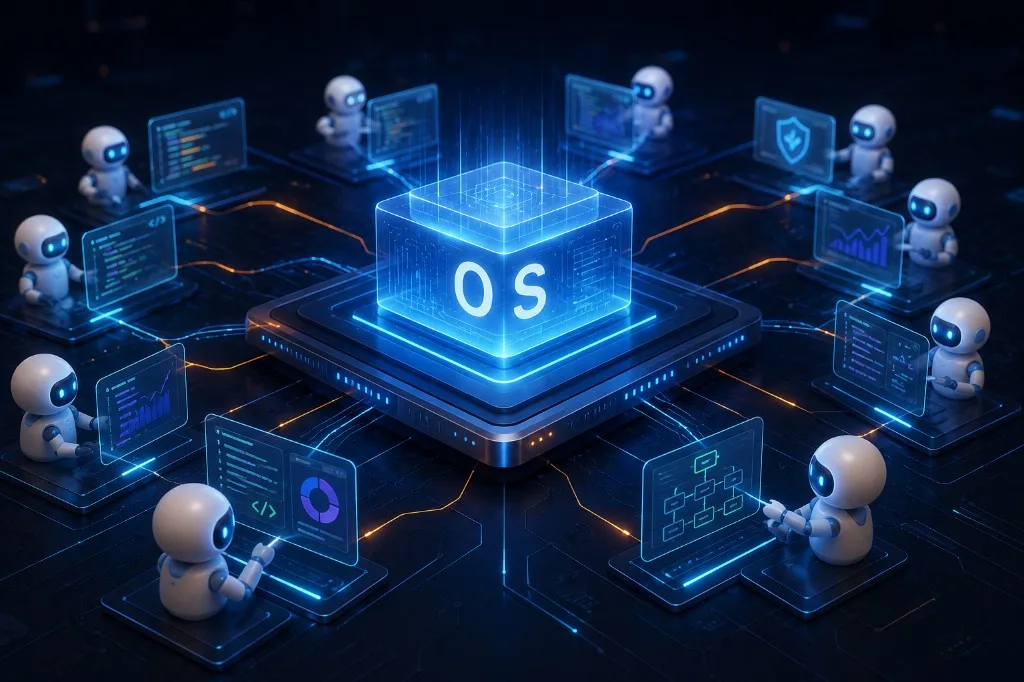
For the Google I/O Writing Challenge, the author describes Antigravity 2.0: 93 autonomous agents assembled a working OS core in ~12 hours for under $1000 in API credits. The platform moved from “IDE helper” to task orchestrator — emphasizing architecture, telemetry, and security gatekeeping.
What happened
The shift is not “Copilot finished a function” but system decomposition across agents: planning, build, integration — with no human-written line in the core path described.
Antigravity 2.0 is positioned as a standalone app with multi-agent orchestration. The piece mentions Gemini 3.5 Flash and TPU v8i for low latency at billions of tokens — infrastructure tuned for agent throughput, not a single chat.
Google also highlights automated code integrity (Code Mender, SynthID) — a line from autonomous codegen toward compliance and audit trails.
Why it matters
For full-stack engineers the signal is not hype (“AI wrote an OS”) but role redistribution:
| Before | Emerging |
|---|---|
| Manual syntax and boilerplate | Task decomposition and agent output review |
| Review for style/logic | Security gates, provenance, policy checks |
| Lines written | Observability and rollback readiness |
When teams scale agentic workflows, bottlenecks are orchestration, token budget, and output quality control — not the model alone.
In practice
- Treat agents as untrusted contributors — CI, lint, SAST, human merge review even when “the agent built it.”
- Budget caps and per-task token limits; $1000 for an OS prototype is not prod scale, but accounting patterns transfer to internal tools.
- Telemetry first: log which agent changed what; provenance IDs for artifacts.
- SynthID / provenance where Google stack and compliance matter.
- Architecture and threat model stay human-owned — don’t outsource boundaries to chat.
Takeaway
Antigravity 2.0 illustrates the trend: developers move toward telemetry auditors and security gatekeepers of autonomous systems. Even without overnight OS builds, orchestration, limits, and provenance already belong in AI-assisted delivery.
Comments