
Contents
In brief
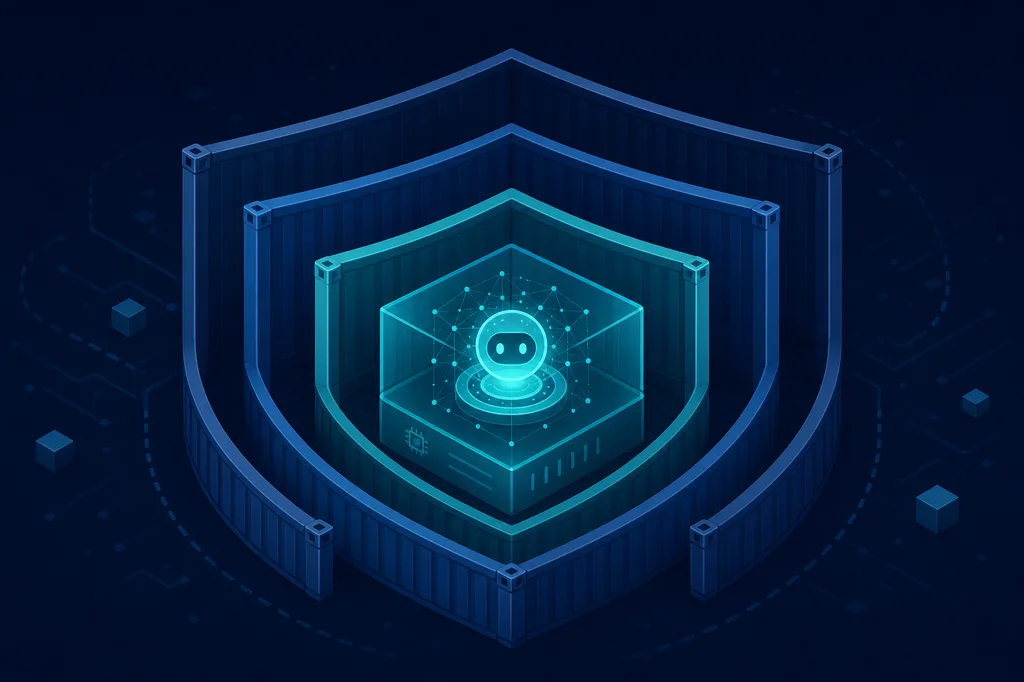
Sandbox security is not “another container” — it is policy and enforcement so isolation boundaries hold under pressure. Docker pushes Sandboxes for coding agents: microVMs, governance, and Engine hardening after incidents with autonomous commands.
What happened
Docker’s agentic AI report: 40% of respondents name security as the top obstacle to scaling agents. Classic sandboxing is familiar; agents need the next layer — who may execute what, which network paths are allowed, how to contain damage.
The post cites a case where an AI-generated command caused serious data loss — autonomous speed beats “junior deleted prod” as a threat model.
Docker Engine addresses CVE-2026-31431 with stronger seccomp, AppArmor, and SELinux. Docker Sandboxes for AI coding agents use microVMs — stronger than namespaces alone for untrusted code.
Docker AI Governance centralizes control over which agents run and with what network/filesystem rights — relevant when many developers attach Cursor/Claude Code to shared infra.
Why it matters
Agents change the threat model: not “developer typo” but autonomous read repo → propose shell → run. Without a sandbox with explicit limits, one prompt or MCP tool can reach host secrets, .env, or corporate networks.
Platform teams should treat isolation as a product requirement, not a late toggle — whether you use Docker, gVisor, Firecracker, or dedicated CI runners.
In practice
- Run agent sessions in disposable sandboxes — no prod kubeconfig or host SSH keys.
- Deny-by-default network; allowlist APIs; log egress.
- Scope secrets — agent tokens, not cloud admin roots.
- Patch Engine/runtime for CVEs; enable seccomp/AppArmor where policy allows.
- Tabletop: “agent ran
rm -rfon a mounted volume” — what breaks? - Governance dashboard or policy-as-code when agent count grows.
Takeaway
Scaling agentic AI needs trust in code execution. Docker frames the answer as sandbox security + governance + microVM. Even off their stack, the rule stands: untrusted agent code should not run on your bare laptop kernel. Details in the Docker Blog post.