
Contents
In brief
Twelve browser tabs on RAG, agents, and MCP — and still no reading order. On Dev.to, Saurabh Pathak published ai-engineer-roadmap: 100 topics in seven phases, from “what is RAG?” to production AI.
The demos run on the Python standard library; an API key is optional. Set ANTHROPIC_API_KEY and Claude can write an answer from the retrieved passages. It teaches the pipeline. It is not a production retriever.
What happened
The friction is familiar: tabs pile up faster than understanding. Pathak wrote the order down first, then the lessons. Basic Python is enough to start today.
Every topic follows the same shape: a plain-English explanation with an everyday analogy, a diagram, Python code, three interview questions with answers, and links to the original paper or official docs. Topics are marked beginner, intermediate, or advanced, so you can skip what you already know.
The seven phases and topic counts:
| Phase | Topics |
|---|---|
| RAG Foundations | 20 |
| Advanced RAG | 20 |
| LLM Concepts | 14 |
| Agentic AI | 16 |
| Frameworks | 8 |
| MCP | 7 |
| Production AI | 15 |
In about five minutes: clone the repo, create a venv, pip install -r requirements.txt, pytest -q, then python 01-rag-foundations/code/mini_rag.py "Why use multi-stage builds?". That script chunks three sample documents, scores them against your question, and prints the best passage with its source file. Demos under each code/ folder stick to the standard library — no network, no key. With ANTHROPIC_API_KEY and the anthropic package, Claude can draft the answer from those passages.
The author is explicit about limits. mini_rag.py scores text with simple matching, not a real embedding model. It shows the pipeline steps; it is not a production retriever. Snippets inside topic pages use libraries such as sentence-transformers, chromadb, and langgraph. Those need installing, and some need a key; each case is marked. Phase 7 includes Dockerfile and Kubernetes YAML examples, but the demos use small in-process stand-ins, so you do not need Docker or Redis just to read along.
CI checks that local Markdown links resolve, validates SVG diagrams, runs tests, and builds the TypeScript MCP example. The author also corrected an earlier claim: not 47 interview questions, but 43 plus 4 system-design prompts. A separate interview-prep folder sits beside the phases.
Why it matters
“RAG”, “agents”, and “MCP” show up in every feed; a full reading path rarely does. Random tutorials hand you one piece, then another stack with no bridge. A sequenced roadmap answers the real beginner (and career-switcher) question: not “which repo next?” but “what do I read next?”
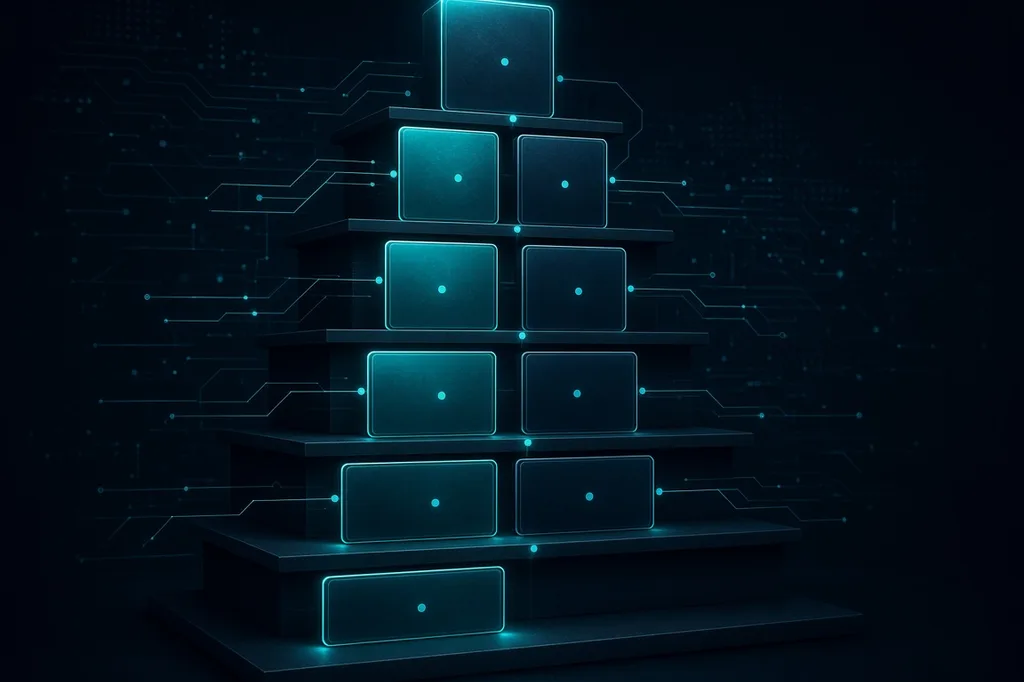
Picture a bookshelf with numbered shelves instead of a desk buried under printouts from twelve tabs. Order alone does not make you senior — but it removes the chaos that makes people quit on tab three.
The split between “stdlib demos teach the steps” and “page snippets pull real libraries” matters too. Many courses blur those layers and leave the feeling that you already ship production systems. Here the boundary is clear: learn the pipeline offline first, then install the heavy dependencies on purpose.
In practice
- Clone techsaurabh-394/ai-engineer-roadmap, create a venv, and run
pytest -q. - Run
mini_rag.pywith your own question and confirm you see chunking, scoring, and a source path — with no API key. - Walk the phases top-down; skip levels you already know via the difficulty tags.
- When a topic page introduces
sentence-transformers,chromadb, orlanggraph, install them deliberately — that is no longer “offline out of the box”. - Optionally set
ANTHROPIC_API_KEYto compare retrieval-only vs retrieval plus a model answer. - Treat the interview-prep folder as a separate pass, not a substitute for reading the phases.
- Do not confuse simple text scoring with embeddings and a real vector index in production.
Takeaway
ai-engineer-roadmap is an open learning path: 100 topics, seven phases, one lesson template, and demos that do not require an API key. The value is the order — and the honest line between a teaching pipeline and libraries you install separately.
Numbered shelves beat twelve tabs. Next step: read, run mini_rag.py, and do not mistake text matching for production retrieval.
Comments