speaking-cards
Expo/React Native app for speaking practice with Jest and Testing Library, Husky and lint-staged for quality gates. Targets mobile UX and iterative card-based learning flows.
DetailsDeveloper news without the noise — My Dev News in Telegram.

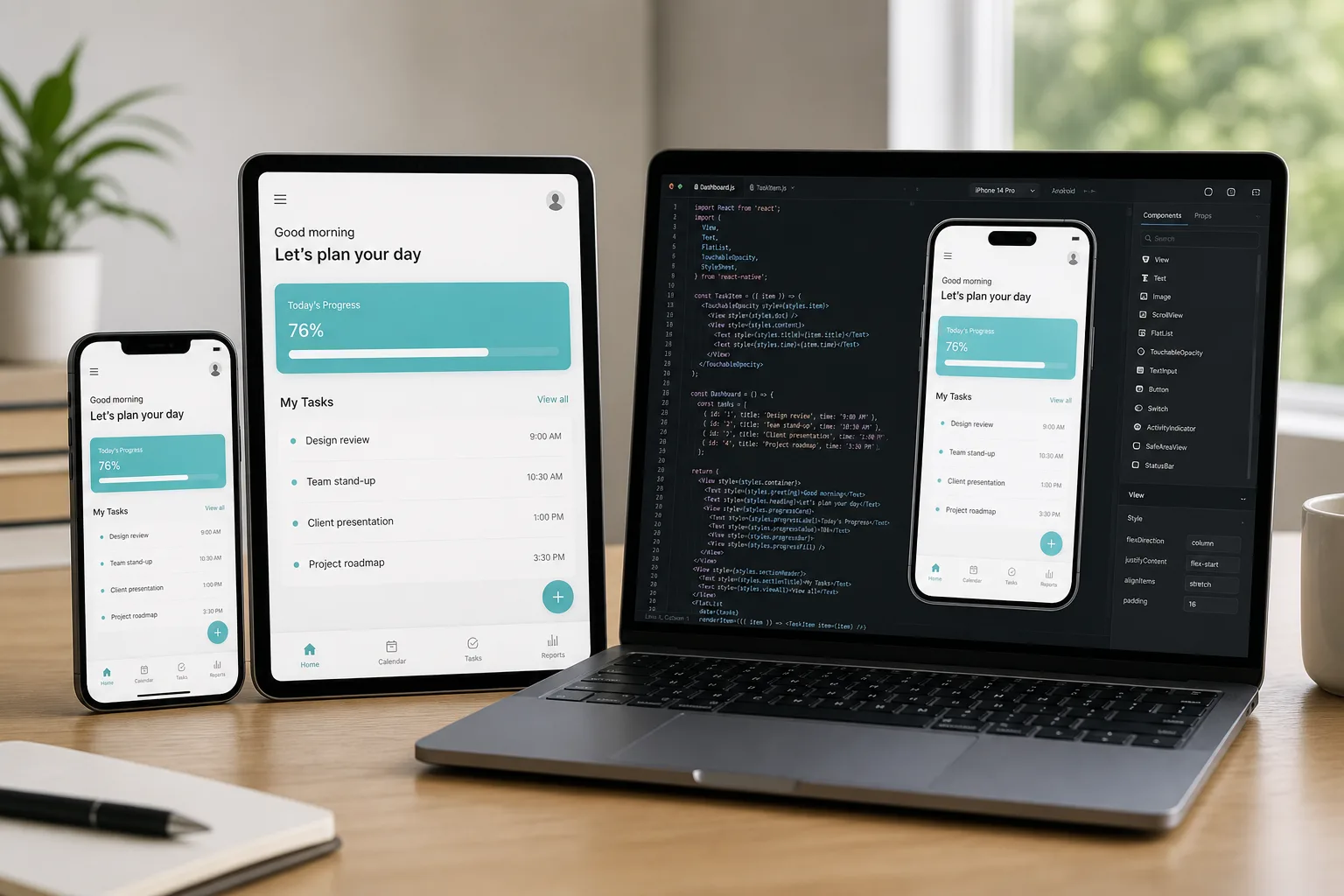
Installable and mobile-first experiences: Expo/React Native, progressive web apps, and structured client applications with releases and quality gates.
Tell me the goal, stack constraints, and timeline — I reply on Telegram.
Beyond marketing pages, I build applications people use daily: structured state, predictable navigation, and builds that survive store review or long-lived installs.
Whether you need a companion app or a focused mobile experience, the goal is clear scope, incremental delivery, and code your team can extend.
Recent deliveries include speaking-cards and digitalvcard—systems where application development skills (TypeScript, React Native, Expo, PWA, React, offline-friendly UX, testing, CI, app store-ready packaging) were applied end to end.
Those projects combined product UI, APIs, and operational concerns: roles, exports, integrations, and observability. The goal is always software your team can extend—not a one-off demo that collapses under real users.
Typical collaboration starts with a written brief: constraints, integrations, compliance, and what “done” means for the first release. We slice work into vertical milestones so you see progress every one to two weeks and can reprioritize without losing the thread.
After go-live we offer a short hypercare window: fix edge cases, tune performance, and transfer knowledge. Long-term support can stay with your in-house team or continue as a retainer—your choice.
We document decisions in plain language, keep staging environments aligned with production, and leave runbooks so your team is not blocked after handoff. If you already have designers or backend engineers, we plug into your rituals instead of inventing a parallel process.
The final acceptance checklist is confirmed in the brief or contract; the list above is a scope alignment guide.
Expo/React Native app for speaking practice with Jest and Testing Library, Husky and lint-staged for quality gates. Targets mobile UX and iterative card-based learning flows.
Details
Digitalvcard is an open-source tool that allows you to create interactive and responsive digital business cards hosted directly on your website, eliminating the need for third-party services. Enjoy elegant design, concis…
DetailsYou describe the goal, constraints, timeline, budget, and infrastructure.
I ask questions, review existing code or a brief when needed, and lock scope.
I propose stages, priorities, and a timeline range; we agree on reporting.
Iterations with intermediate results: commits, demos, and feedback.
Deploy and docs as needed; we agree on maintenance or targeted follow-ups.
Tap a question to expand the answer.
Expo/React Native when you need app-store distribution and native APIs; PWA when the browser should feel like the product surface.
I prepare store-ready builds, signing setup guidance, and release hygiene; store accounts stay under your brand.
Where it matters: cached reads, queued writes, and clear UX when connectivity returns—scoped to real user needs.
Pragmatic CI checks and tests on critical paths—not ceremony; enough to catch regressions before users do.
Yes—companion apps often share APIs and auth with the web backend rather than duplicating business logic.
Tell me the goal, stack constraints, and timeline — I reply on Telegram.