Contents
In brief
Vector DB comparisons often stop at recall@k and latency. A Dev.to roundup focuses on what breaks when a RAG service leaves Jupyter for production—clients, installs, API versions.
What happened
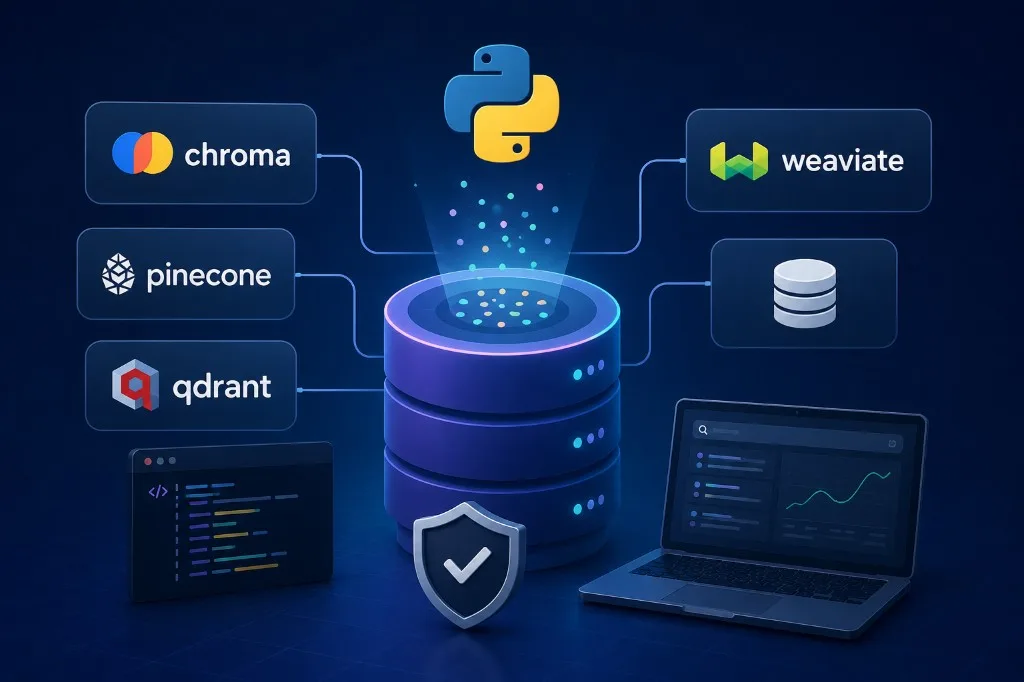
Five stacks reviewed through client architecture, release stability, and migration pain:
| Library | Strength | Production risk |
|---|---|---|
| ChromaDB | Fast prototype, embedded | Packaging; not distributed-first |
| Pinecone | Fully managed | Requires network; SDK churn |
| Qdrant | Same API local → prod | Strong for self-host teams |
| Weaviate | Hybrid search | Heavy schema migrations |
| (fifth in source) | See original | Workload-dependent |
Failures often come from client/server mismatch, not “slow HNSW.”
Why it matters
Chroma “just works” in a notebook. In Docker/K8s you hit different embedded processes, dependency conflicts, Pinecone major API shifts, and surprise SDK breaks.
For full-stack engineers, the vector store is a multi-year contract, not a demo pip install.
In practice
- Embedded prototypes are fine; before prod, choose hosted vs self-hosted explicitly.
- Pin client versions; read SDK changelogs, not only model cards.
- Run the same ingestion pipeline on staging with production-like networking.
- For hybrid keyword + vector search, evaluate Weaviate/Qdrant early—not only benchmark winners.
- Plan schema migration and re-index before launch.
Takeaway
The “best” vector DB is the one whose client and deployment story fits your architecture. Search metrics matter after delivery stability.