A stable REST (or GraphQL) façade for mobile apps, partners, and microservices: versioning, auth, rate limits, OpenAPI docs. 1C publishes HTTP services; middleware normalizes payloads and shields the database from arbitrary queries.
Engagements around api for 1c usually start with a short discovery call, a written scope outline, and a first milestone you can demo to stakeholders within weeks—not months of silent development.
When this fits
Teams usually request api for 1c when an off-the-shelf product does not match process, compliance, or integration constraints.
- Operations outgrow spreadsheets and informal tools around api for 1c
- You need a stable system with roles, audit trail, and predictable releases
- Internal or external APIs must exchange data without manual re-entry
- Leadership wants measurable delivery milestones, not a single big-bang launch
What is included
- Discovery workshop: goals, constraints, existing systems, success metrics
- Architecture sketch and backlog sliced into vertical milestones
- Implementation with code review, staging environment, and handoff notes
- Launch support and a short hypercare window after go-live
Stack and approach
For 1C integration and custom solutions we rely on 1C, HTTP/REST, OData, HTTP services, TypeScript, Node.js, React, PostgreSQL, webhooks, VK/MAX/Telegram bots, dashboards, LLM. We prefer explicit types, small deployable increments, and observability hooks (structured logs, health checks) so your team can operate the system after handoff.
Example from practice
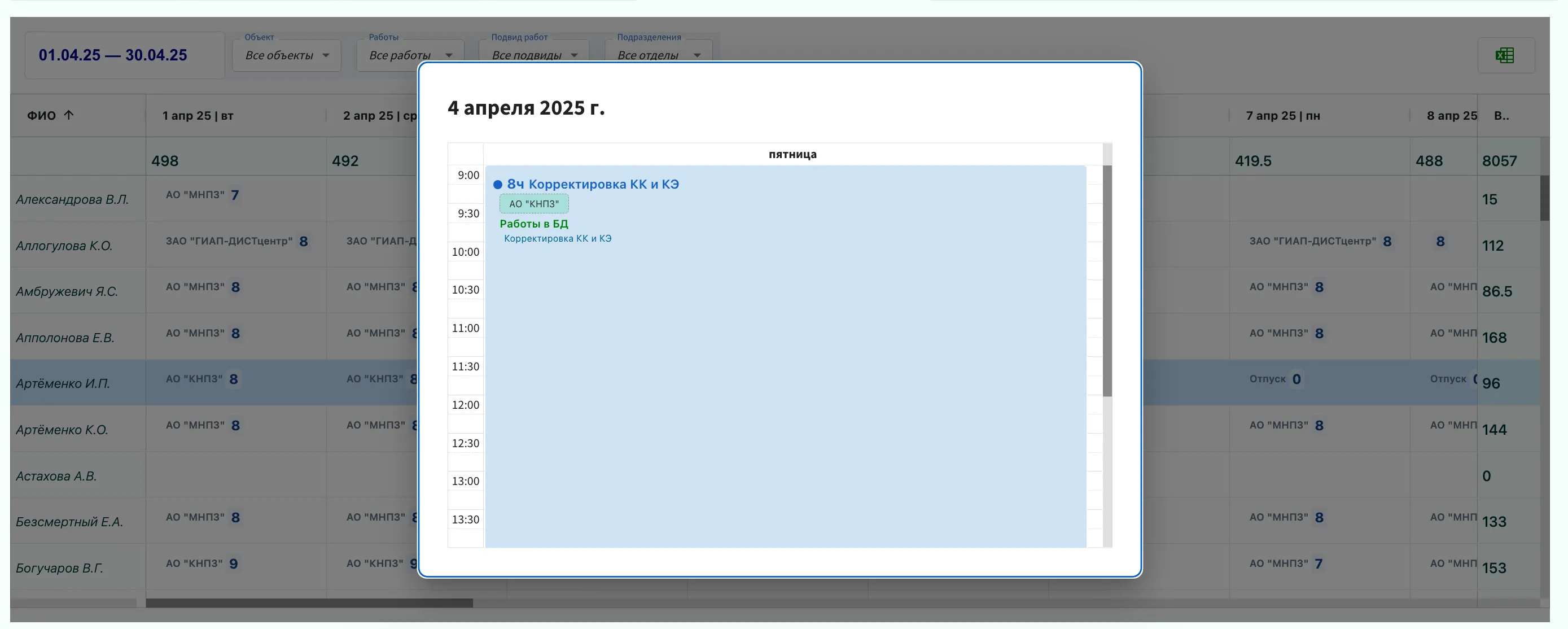
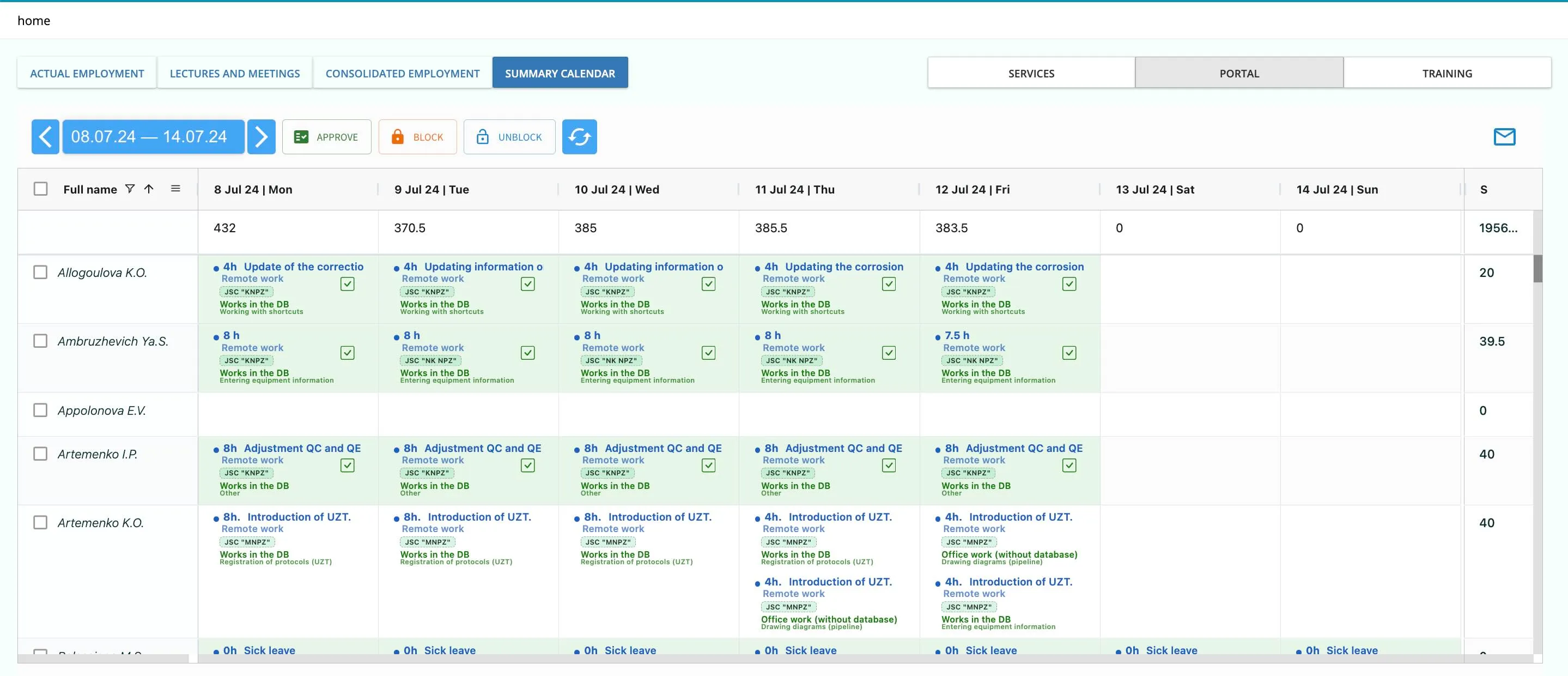
Related deliveries: timetracking, EmploymentApproval. These projects illustrate how we structure UI, APIs, and data for production use—not slide-deck prototypes.
Timeline and format
A focused MVP often ships in 4–8 weeks depending on integrations and compliance. We work in 1–2 week iterations with demoable increments; scope changes are tracked openly so estimates stay honest.