Lesson 1. The lab — Train CNN and CRNN from scratch
The series Train CNN and CRNN from scratch: what a CNN and a CRNN are, why the cascade exists, and how to set up a reproducible lab.
Tag
All blog posts with this tag.
The series Train CNN and CRNN from scratch: what a CNN and a CRNN are, why the cascade exists, and how to set up a reproducible lab.
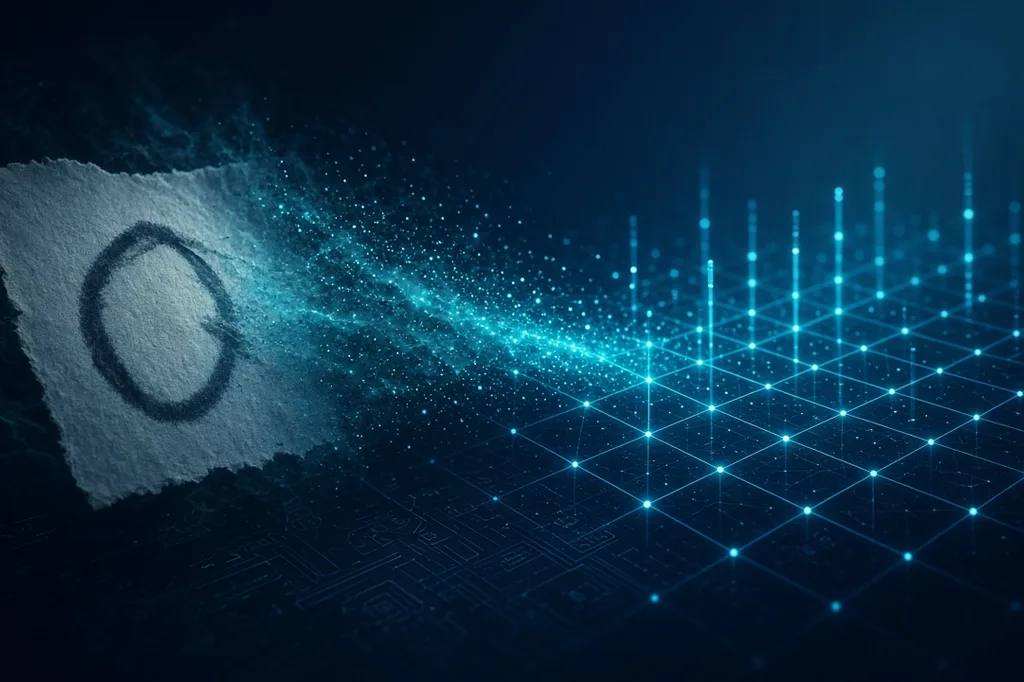
The series Train CNN and CRNN from scratch: cell crop → tensor [1, 48, 160]. Gray channel, safe contrast, letterbox without distortion, and inversion — before any model.
Train CNN and CRNN from scratch: the blank=0 index contract, label encoding, normalization, and format validation — before the first dataset.
Train CNN and CRNN from scratch: styled sheets, repeated values, hard empty cells, a source adapter, and all.jsonl.
Train CNN and CRNN from scratch: split train/val/test by sheets, strata, verify_split, and a 1-NN leakage demo.
Train CNN and CRNN from scratch: a convolution by hand, baselines, the starting loss, and the first empty/value net with 23,538 parameters.

How data becomes numbers, a model computes an answer, error points to the next adjustment, and held-out examples decide whether the network learned. From apartment prices to convolution, recurrence, and attention.
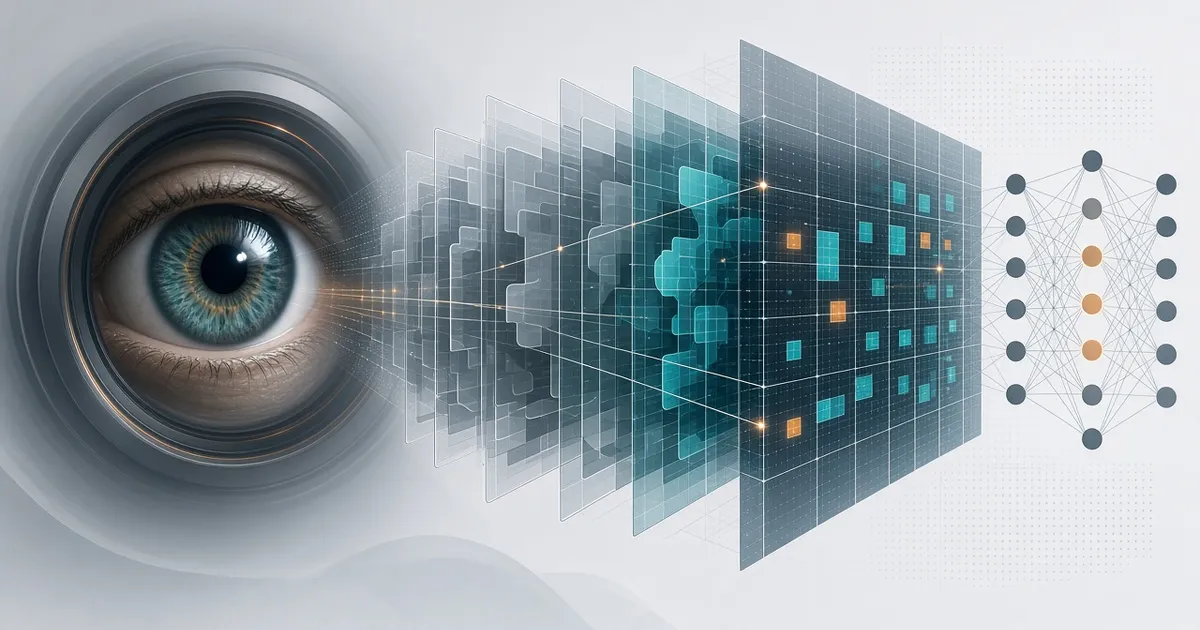
Computer Vision is not a PyTorch-vs-TensorFlow debate. Data, tensors, CNNs, classification, detection, segmentation, transfer learning, metrics, and production form one pipeline that survives an API change.
Why GPUs matter for neural networks, how CPU, TPU, and NPU differ, why VRAM and bandwidth matter, how multi-GPU setups work, quantization, and the stack from PyTorch down to silicon.
What an ML framework is, how tensors and autograd work, how PyTorch, TensorFlow, JAX, tinygrad, and micrograd differ, and what to pick for your task — from learning to production inference.
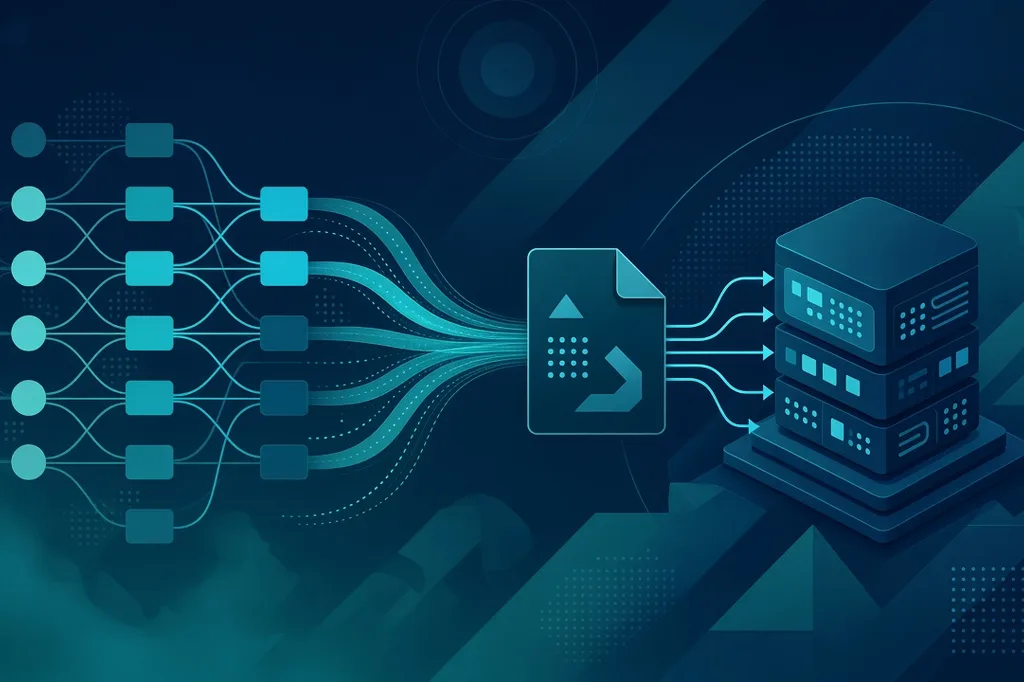
What ONNX and ONNX Runtime are, how to export from PyTorch, opsets and dynamic axes, why CRNN/YOLO exports break, and how to match Python before the browser.
How PyTorch and TensorFlow differ: tensors, autograd, the training loop, data pipelines, GPU/TPU, deployment, CV and LLM ecosystems — and how to pick a framework for your task in 2026.