

Hunting JavaScript memory leaks with V8 mechanics and Chrome DevTools
How V8 decides what stays alive, seven common leak patterns, and how to find the retaining path with Performance and heap snapshots.
Developer news without the noise — My Dev News in Telegram.

Tag
All blog posts with this tag.
How V8 decides what stays alive, seven common leak patterns, and how to find the retaining path with Performance and heap snapshots.

A React 19 dashboard had 214 useMemo and useCallback calls. The compiler removed most of them; two edges stayed manual.

Tie LCP, INP, and the funnel to revenue: major studies, a loss formula, an interactive calculator, A/B tests, and a performance budget for ecommerce.

TripleW’s case: a 5,000-SKU catalog moved from WooCommerce to Next.js 16 — LCP from 3.8s to 680ms and CMI payments without PHP timeouts.

A map of large-language-model software: compute, memory, and communication, and which parallelism actually cuts latency.

Single bundle vs many requests, chunk groups, and Next.js 16.3 experiments: smarter fetching, analytics-based merging, CJS tree-shaking, shared runtime.

There are no universally fast data structures. How to count storage, access, mutation, and movement costs — and pick a structure for the actual workload.

Five Rust layout changes in Big Pineapple cut per-entry memory 56% and sped inserts 43% for 1.1.1.1-scale DNS.

A Dev.to author reports running Gemma 4 26B on a Xeon E5 v2 without a GPU. Here are the requirements, claims, and caveats.

How the author stabilized Core Web Vitals after dropping React: Cache API, cookie-gated HTML, removing Zod from the browser, and refactoring Astro forms.
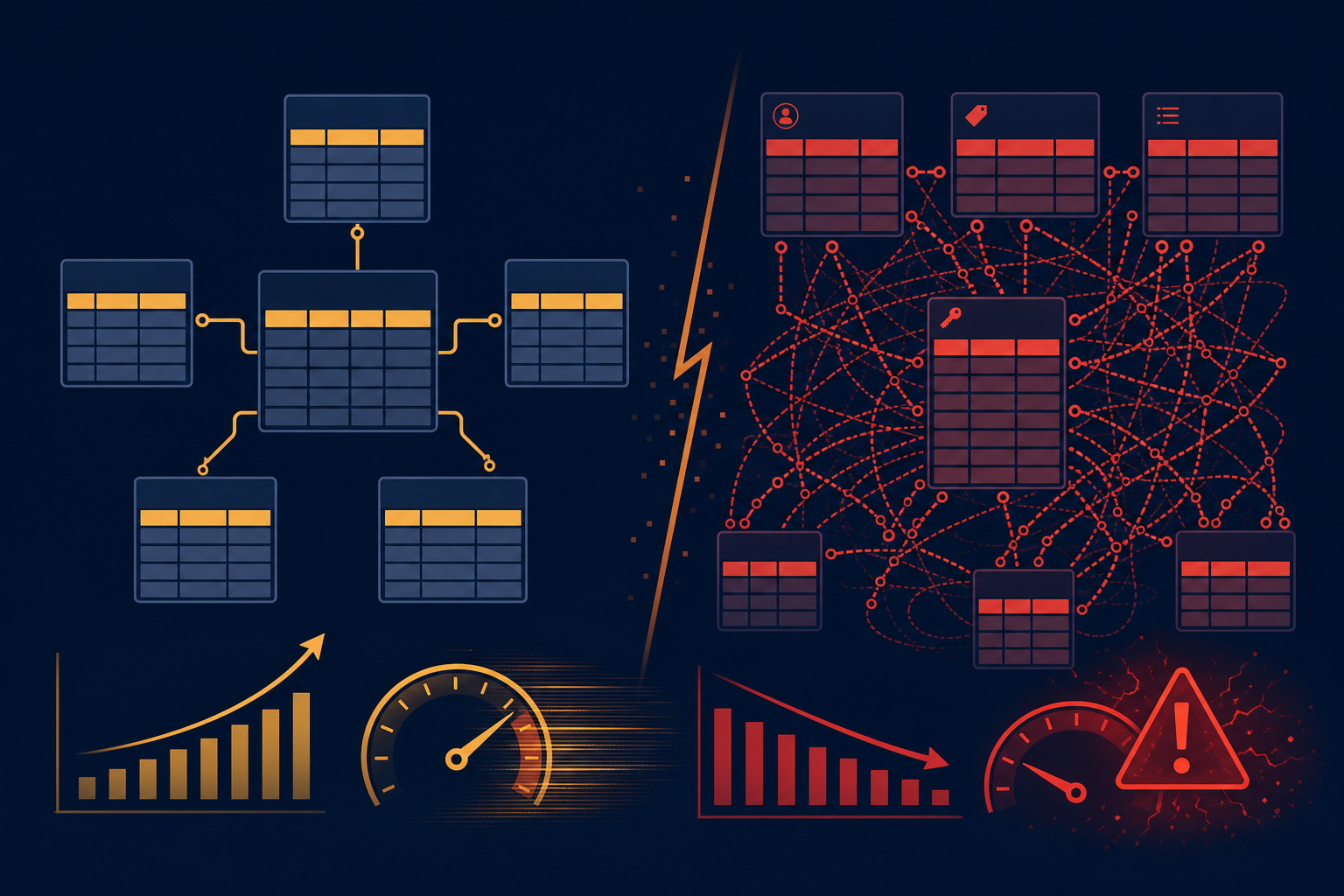
Entity–Attribute–Value looks perfect at the start: flexibility without migrations. Why JOINs, indexes, and reports break ERP years later — and where EAV fits, and where it does not.

History and practice: BMP, GIF, JPEG, PNG, WebP, HEIC, AVIF, and JPEG XL. How compression works, what to pick in 2026, and how to serve images without hurting LCP.

Profiling, indexes, ORM refactors, materialized views, connection pooling, and cache — a practical PostgreSQL and MySQL guide.
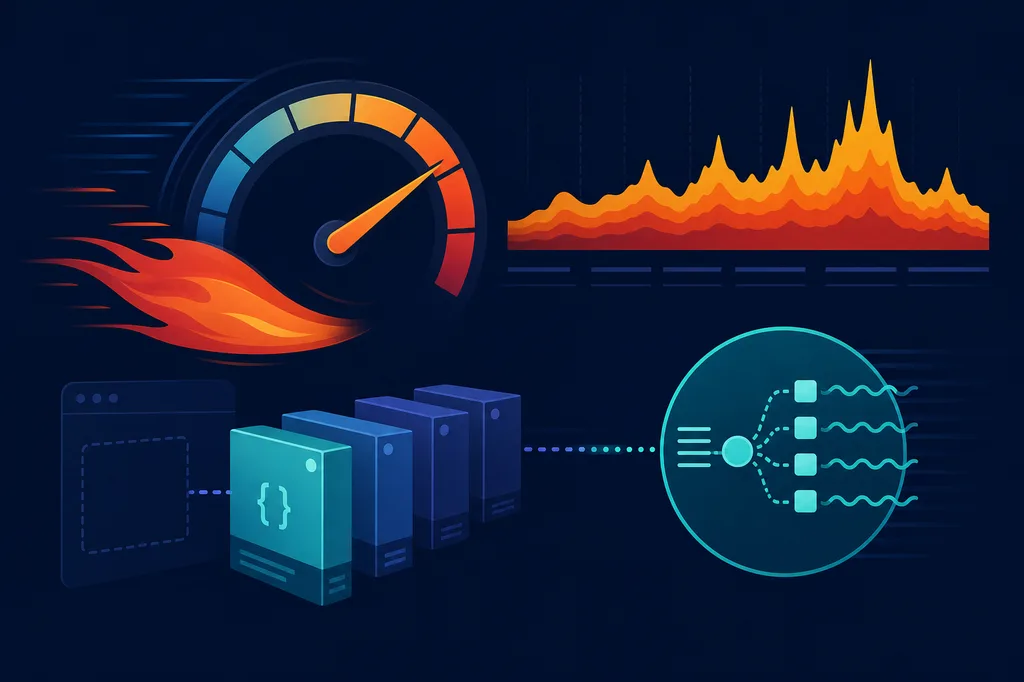
Measure first, then optimize: debounce, lazy load, Web Workers, bundle diet, and a quick-wins checklist.

Server Components by default, less client JS, next/image, no CLS, caching, next/script, and measuring on throttled mobile—not your laptop.

arXiv preprint: reproducible corpus generator up to 60k docs — near-linear speed, controlled distractors, BM25 nDCG@10 drops from 1.00 to 0.43 as noise grows.

Next.js static export, Web Workers for heavy algorithms, bitboards for Block Blast, trie for word search — $0 hosting.

The tsk case: finite state transducers in Rust, shared Finnish suffixes, and why SQLite FTS was only a stepping stone.